MonitEasy | AI-Powered IoT Monitoring for Transformers, Solar, Wind & Industrial Assets
Feeder Pillar & LTP · IoT Monitoring

MonitEasy FPMS
Feeder Pillar & LTP
Monitoring SystemLow-Voltage Distribution Infrastructure Intelligence

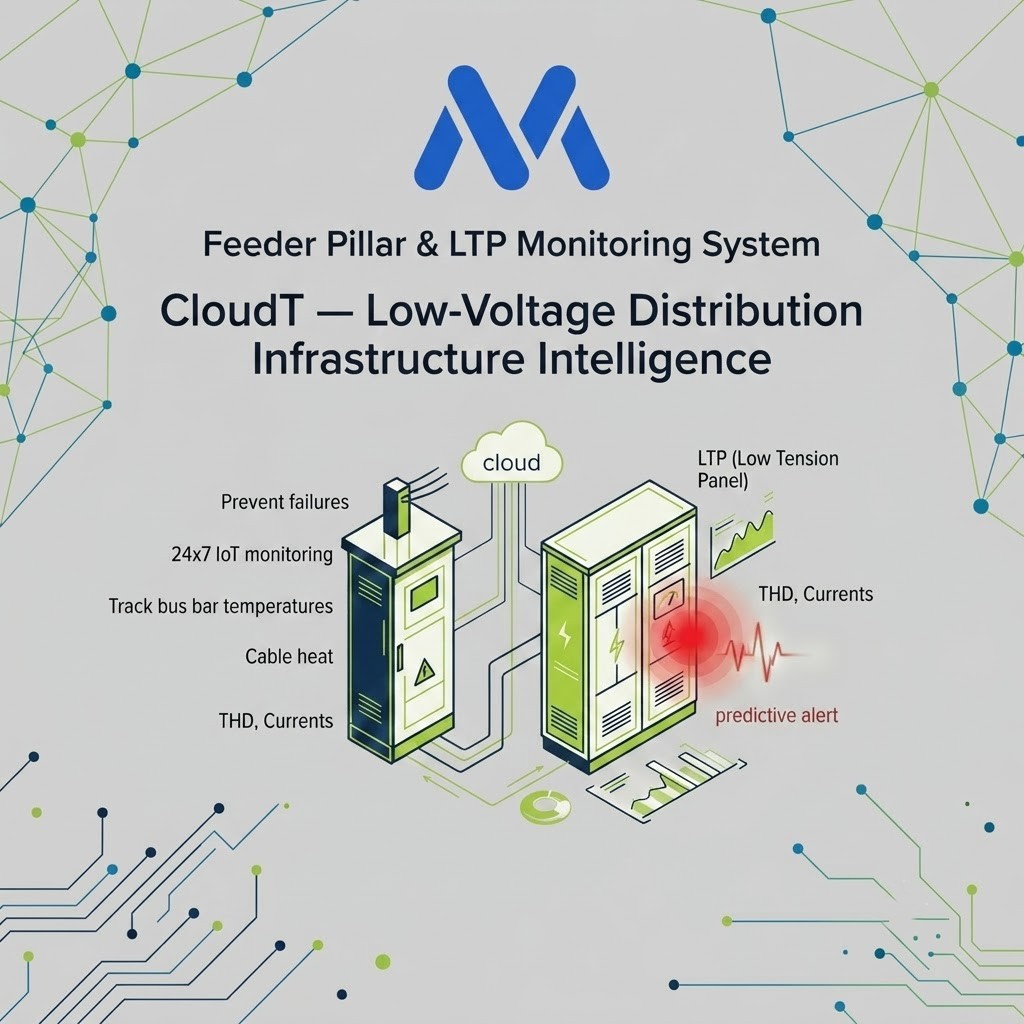
Help prevent feeder pillar and Low Tension Panel failures with 24×7 IoT monitoring. Track bus bar temperatures, cable heat, humidity in the HV cable box, incoming/outgoing currents, THD, and energy parameters — with instant predictive alerts.

Real-TimeIoT Monitoring
Feeder + LTPDual Coverage
24×7Continuous
99.9% UptimeAWS Cloud

MonitEasy FPMS (Feeder Pillar & LTP Monitoring System) is an IoT platform covering both feeder pillars and Low Tension Panels. It tracks bus bar and cable temperature, HV cable box humidity, per-circuit current (up to 6 outgoing, 2 incoming), THD and energy parameters, with instant alerts. It is designed for commercial, industrial and municipal low-voltage networks.

Key Facts

FPMS at a glance

Who it's for
Commercial, industrial and municipal operators managing feeder pillars and Low Tension Panels (LTPs) in low-voltage distribution networks.
Problems it solves
Moisture ingress and corrosion, overloading, loose connections and hot joints, harmonic distortion, and lack of circuit-level fault visibility.
Parameters monitored
Bus bar and cable temperature (R/Y/B/N), HV cable box humidity & temperature, V/I/PF, energy (kWh/kVAh/kVARh), per-circuit current, and THD (LTP).
Circuit coverage
Up to 6 outgoing circuits and 2 incoming cables per LTP, with individual circuit-level current and temperature tracking.
Deployment model
Sensor nodes on bus bars, cables and circuits; MonitEasy IoT gateway transmitting via 4G, Wi-Fi or Ethernet to the cloud dashboard.
Alert channels
Instant SMS and email notifications to up to 5 configured stakeholders on threshold breach.
About Feeder Pillar & LTP Monitoring

Feeder Pillar & Low Tension Panel Monitoring System

Feeder pillars are essential for distributing electrical power to multiple circuits in low-voltage networks. They serve as a central point for controlling, isolating, and protecting circuits — supporting reliable power distribution across commercial, industrial, and municipal setups.

Low Tension Panels (LTPs) are used in low-voltage electrical systems to manage and distribute electricity across industrial, commercial, and residential setups. They house components like circuit breakers, busbars, and control devices for efficient and safe power management.

MonitEasy's IoT monitoring solution covers both feeder pillars and LTPs — continuously tracking thermal, environmental, electrical, and power quality parameters to support proactive maintenance and reduce unplanned outages.

2
Complete Asset Coverage
Feeder Pillar + LTP in One Platform
Bus Bar Temp HV Cable Humidity THD Analysis 6-Circuit Monitor Instant Alerts Cloud Analytics
MonitEasy feeder pillar dashboard showing bus bar temperature and circuit current readings
2-in-1FP + LTP
24×7Monitoring
99.9%Uptime
0+
FP & LTP Nodes
6+
Outgoing Circuits
24×7
Real-Time Monitoring
0%
Fewer Unplanned Faults*

*Aggregated figure from MonitEasy customer deployments; methodology available on request.

Root Cause Analysis

Why Feeder Pillars & LTPs Fail

Monitoring helps prevent failures by continuously tracking the exact parameters linked to each failure mode — enabling teams to act before a minor issue becomes a costly outage.

Feeder Pillar Failure Reasons
Central LV distribution points for multi-circuit networks
1
Moisture & Corrosion
Water ingress corrodes terminals and connectors. Humidity in the HV cable box is tracked continuously to detect ingress before corrosion sets in.
2
Faulty Enclosure
Poor sealing allows dust and pests, causing faults. Ambient humidity and temperature sensors detect environmental anomalies resulting from enclosure failure.
3
Overloading
Excess load overheats components. Incoming and outgoing current monitoring per phase with configurable threshold alerts helps prevent sustained overload.
4
Short Circuits
Damaged insulation leads to faults. Busbar temperature near ACBs and cable temperature differentials identify insulation stress early.
5
Aging Components
Worn parts reduce reliability. Continuous thermal drift monitoring flags components approaching end-of-life for planned replacement.
LTP Failure Reasons
Industrial, commercial & residential distribution boards
1
Loose Connections
Arcing from vibrations or poor assembly. Cable temperature differentials across phases identify hot joints and loose connections before arcing damage.
2
Poor Maintenance
Lack of cleaning and checks causes issues. MonitEasy's continuous data and auto-reports support maintenance scheduling based on actual asset condition, not calendar intervals.
3
Overloading
Excess load damages internal components. Per-circuit current monitoring across all 6 outgoing circuits and 2 incoming cables detects overload conditions.
4
Environmental Impact
Heat, dust, and humidity affect operations. Multi-sensor environmental monitoring helps ensure operating conditions remain within safe design parameters.
5
Aging Equipment
Reduced efficiency from prolonged use. Lifecycle trend analytics track degradation rates and flag panels approaching maintenance thresholds.
Key Parameters We Monitor

Feeder Pillar & LTP Parameters

Monitoring supports efficient feeder pillar and LTP operations by addressing overloading, insulation stress, and environmental impacts through real-time multi-parameter tracking.

Feeder Pillar
All parameters monitored continuously — 24×7×365
Ambient Temperature & Humidity — environmental baseline inside the feeder pillar enclosure to detect poor sealing and ingress
Humidity & Temperature in HV Cable Box — early moisture detection at the most critical high-voltage termination zone
Basic Parameters (V, I, PF) — voltage, current, and power factor per phase for real-time electrical health monitoring
Energy Parameters (kWh, kVAh, kVARh) — total energy consumption, apparent power and reactive power for billing and efficiency
Incoming Cable Temperature (R, Y, B, N) — all four conductors monitored for supply-side thermal stress detection
Outgoing Cable Temperature (R, Y, B, N) — per outgoing set to detect overloaded individual feeders before damage occurs
Bus Bar Temperature near ACB (R, Y, B, N) — critical busbar thermal health across all four conductors at the ACB junction
Outgoing Current (R, Y, B) — per feeder output current monitoring for load distribution analysis
Incoming Current (R, Y, B) — total supply current per phase for complete load balance verification
Low Tension Panel (LTP)
Full panel monitoring including 6 outgoing circuits
Load Parameters: Voltage (V), Current (I), Power Factor (PF) — phase-wise electrical health for the entire LTP panel
Energy Parameters (kWh, kVAh, kVARh) — consumption metering for energy cost allocation and efficiency analysis per panel
Incoming Cable Temperature (R, Y, B) — 2 cables — thermal monitoring for both incoming cables detecting supply-side stress
Outgoing Cable Temperature (R, Y, B) — 6 circuits — individual circuit thermal health monitoring for all six outgoing distribution circuits
Outgoing Current (R, Y, B) — 6 circuits — per-circuit current monitoring to detect load imbalances and overloaded outputs
Incoming Current (R, Y, B) — 2 cables — total incoming current monitoring per phase for both supply cables
THD (Total Harmonic Distortion) — Current & Voltage — harmonic analysis for power quality compliance and overheating prevention
Monitoring Benefits

How FPMS Helps Overcome
Feeder Pillar & LTP Issues

Real-time multi-parameter monitoring addresses major failure modes — from moisture ingress and overloading to loose connections and power quality degradation.

Bus Bar & Cable Thermal Guard

Continuous temperature monitoring of bus bars, incoming cables (2), and all 6 outgoing circuits helps detect hotspots and loose connections before thermal failure or arc flash events.

Thermal Protection

HV Cable Box Moisture Detection

Dedicated humidity sensors inside the HV cable box and ambient environment detect moisture ingress at the most critical point — before water contact causes insulation failure or arcing.

Ingress Guard

Load Imbalance Detection

Phase-wise current monitoring across all incoming and outgoing circuits — up to 6 outgoing plus 2 incoming cables — identifies load imbalances that cause neutral current, overheating, and failures.

Phase Balance

Power Quality & THD

THD monitoring for both current and voltage (LTP) identifies harmonic distortion that causes overheating, equipment degradation, and power quality standard violations — flagged promptly.

THD Analysis

Multi-Circuit Fault Isolation

Individual circuit-level monitoring supports rapid fault isolation — when a single circuit overloads or overheats, the exact location is identified quickly, minimising diagnostic time and outage duration.

Circuit-Level

Instant Multi-Channel Alerts

When any parameter — temperature, current, humidity, or THD — crosses a configurable threshold, FPMS dispatches instant SMS and email alerts to up to 5 stakeholders for rapid response.

Real-Time Alerts
System Capabilities

Feeder Pillar & LTP Monitoring Features

Comprehensive IoT capabilities that make FPMS a reliable monitoring platform for feeder pillar and LTP infrastructure.

01

Bus Bar & Cable Temperature Monitoring

Monitor bus bar temperatures near ACBs (R, Y, B, N) and cable temperatures for both incoming and outgoing conductors — an early, reliable indicator of loose connections, overloads, and insulation stress.

Bus Bar TempIncoming Cable TempOutgoing Cable Temp
02

6-Circuit Outgoing Current Monitoring

Monitor outgoing current per phase (R, Y, B) for all 6 outgoing circuits simultaneously — with individual circuit threshold alerts that identify overloaded feeders before insulation damage or tripping occurs.

6 CircuitsPer-Phase CurrentThreshold Alerts
03

HV Cable Box Humidity & Temperature

Dedicated sensors inside the HV cable box monitor both humidity and temperature at the critical connection zone — detecting moisture that causes arcing and temperature rise that signals insulation stress.

HV Cable BoxHumidityTemperature
04

THD Monitoring (LTP)

Track Total Harmonic Distortion for both current and voltage across all phases in LTPs — supporting power quality compliance and identifying harmonic sources that cause transformer and equipment overheating.

THD CurrentTHD VoltagePower Quality
05

Complete Energy Metering

Track kWh, kVAh, kVARh consumption along with V, I, and PF per phase — enabling energy cost allocation across circuits, efficiency benchmarking, and reactive power correction insights.

kWhkVAh / kVARhPower Factor
06

Remote Web & Mobile Monitoring

Access live feeder pillar and LTP data from any device, anywhere. MonitEasy's AWS-backed infrastructure keeps electrical distribution data accessible — with configurable alerts and historical trend reports.

Web DashboardMobile AppAny Device
How It Works

From Sensor to Smart Decision

A seamless IoT pipeline from feeder pillar sensors to actionable maintenance intelligence on your dashboard.

  1. 1
    📡

    Sensor Node Installation

    IoT sensor nodes installed on feeder pillars and LTPs capture temperature, humidity, current, voltage, THD, and energy parameters from every bus bar, cable, and circuit.

  2. 2
    🔌

    MonitEasy Gateway Collection

    The MonitEasy IoT Gateway aggregates data via MODBUS/RS485, applies edge-level threshold logic, and transmits securely to the MonitEasy AWS cloud via 4G/Wi-Fi/Ethernet.

  3. 3
    ☁️

    Cloud Processing

    MonitEasy's cloud platform processes incoming data — detecting anomalies, identifying degradation trends across circuits, and generating maintenance recommendations.

  4. 4
    🔔

    Instant Alerts

    When parameters exceed thresholds — a cable temperature spike, humidity surge in the HV box, or circuit overload — instant SMS and email alerts reach up to 5 stakeholders.

  5. 5
    📊

    Live Dashboard & Reports

    Real-time dashboards show all circuits, cable temperatures, and environmental parameters with trend charts and historical analysis — on web and mobile from any location.

  6. 6
    🔄

    Continuous Improvement

    Trend models learn from historical patterns specific to each feeder pillar and LTP — progressively refining fault detection and supporting better-planned maintenance schedules.

Technical Specifications

System Specifications

MonitEasy FPMS — MTCTE certified, covering both feeder pillar and LTP assets in a single unified platform.

MonitEasy FPMS technical specification — last reviewed August 2026.
ParameterSpecificationStatus
Protocol SupportMODBUS / RS485 / TCPCertified
Connectivity4G LTE / Ethernet / Wi-FiActive
Cable Temp MonitoringIncoming + Outgoing (R,Y,B,N) per setLive
Bus Bar MonitoringNear ACB — R, Y, B, N phasesActive
HV Cable BoxHumidity + Temperature (dual sensor)Live
Outgoing CircuitsUp to 6 circuits — V, I, Cable TempActive
Incoming CablesUp to 2 cables — V, I, Cable TempActive
THD Monitoring (LTP)Current & Voltage — all phasesSupported
Energy MeteringkWh, kVAh, kVARh, V, I, PFActive
Alert ChannelsSMS + Email (up to 5 recipients)Live
Cloud PlatformAWS-hostedActive
CertificationMTCTE (TEC) CertifiedCertified
LIVE FP & LTP ALL OK
Sample Dashboard View
Bus Bar Temp (R)
44°C
HV Box Humidity
72%
Ckt-4 Current
88A ⚠
THD Current
4.8%
All Circuits
Online
Comparison

FPMS vs. manual thermal survey

AspectMonitEasy FPMSPeriodic manual thermal survey
Data frequencyContinuous, real-time per circuitPoint-in-time, typically annual or on-request
Circuit-level detailUp to 6 outgoing + 2 incoming circuits tracked individuallyDepends on technician access and thermal camera angle
Moisture detectionDedicated HV cable box humidity sensorNot typically captured by thermal imaging alone
Power quality (THD)Continuous THD tracking (LTP)Rarely included in a thermal survey
AlertingSMS/email to up to 5 stakeholders on breachNone between survey visits
FAQ

Frequently asked questions

Does FPMS monitor both feeder pillars and LTPs on one platform?

Yes. FPMS covers both feeder pillars and Low Tension Panels (LTPs) from a single unified dashboard, tracking thermal, environmental, electrical and power-quality parameters for each asset type.

How many outgoing circuits can FPMS monitor per LTP?

FPMS supports monitoring of up to 6 outgoing circuits and 2 incoming cables per LTP, with per-circuit current and cable temperature tracking.

How does FPMS detect moisture ingress in the HV cable box?

Dedicated humidity and temperature sensors inside the HV cable box continuously track conditions at the critical termination zone, flagging rising moisture before it causes arcing or insulation failure.

What is the difference between a feeder pillar and an LTP?

A feeder pillar is a central low-voltage distribution point that controls, isolates and protects multiple outgoing circuits, often outdoors. An LTP (Low Tension Panel) is an indoor/enclosed distribution board housing circuit breakers, busbars and control devices for a building or facility. FPMS monitors both asset types.

Can FPMS isolate which specific circuit is overloaded?

Yes. Individual circuit-level current and temperature monitoring across all outgoing circuits allows FPMS to identify the exact overloaded or overheating circuit, rather than only flagging a fault at the panel level.

What alerts does FPMS send and to how many people?

FPMS dispatches instant SMS and email alerts to up to 5 configured stakeholders whenever a monitored parameter — temperature, current, humidity or THD — crosses its configured threshold.

MonitEasy Footer V1 — Precision Dark